
By Dr. Mansoor Zoveidavianpoor
Germany’s energy transition has taken another significant step underground.
Researchers have completed exploratory drilling to a depth of approximately 1,640 feet (500 meters) near the former coal-powered industrial hub of Weisweiler in North Rhine-Westphalia, uncovering promising geological data that could support future geothermal heating projects in one of Germany’s most energy-intensive regions.
The project is part of Germany’s broader effort to replace fossil-fuel heating sources with low-carbon alternatives as the country continues its transition away from coal-fired power generation. The drilling campaign is expected to improve geological understanding of the subsurface and help identify suitable locations for future geothermal developments.
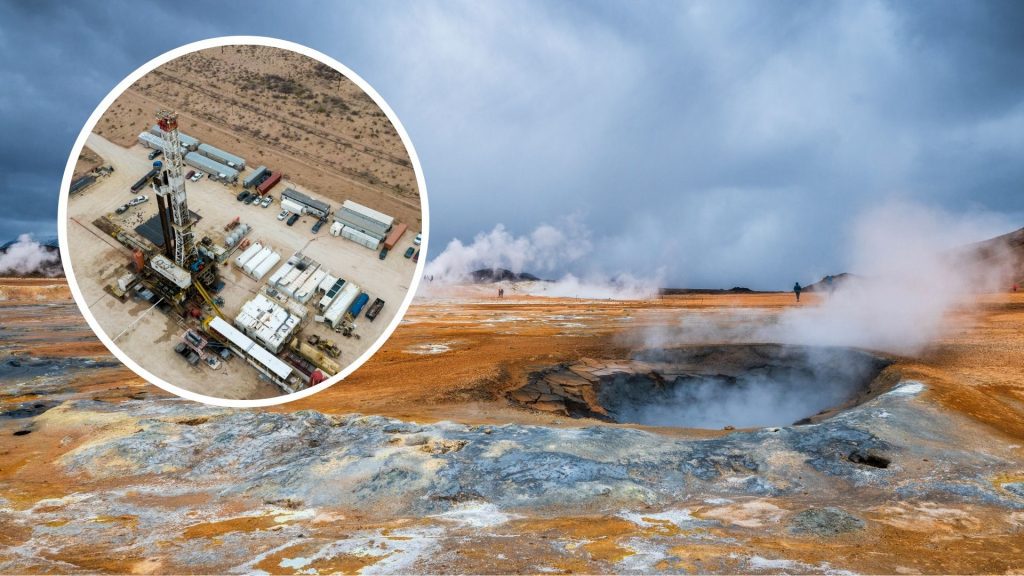
George Pachantouris/Joey Ingelhart [https://interestingengineering.com/energy/germany-drills-1640-feet-geothermal-heat]
From Coal to Geothermal
For decades, the Rhineland region has been synonymous with lignite coal mining and power generation. As coal plants approach retirement, policymakers and researchers are searching for new energy solutions capable of supporting local communities while reducing carbon emissions.
Geothermal energy offers one of the most attractive options because it provides a continuous, weather-independent heat source. Unlike solar and wind power, geothermal systems can operate around the clock, making them particularly valuable for district heating networks and industrial heat applications.
The Weisweiler drilling program forms part of ongoing efforts to evaluate whether the region’s underground geology can support large-scale geothermal development. Data gathered during the project will help researchers refine subsurface models and better understand heat potential at greater depths.
Why Geothermal Matters
Germany faces a major challenge in decarbonizing its heating sector.
While significant progress has been made in renewable electricity generation, heating remains heavily dependent on fossil fuels. Geothermal energy is increasingly viewed as a key component of future district heating systems because it can provide stable, local, and low-emission heat supplies.
Industry experts estimate that geothermal resources could satisfy a substantial share of Germany’s future heating demand if suitable reservoirs are successfully developed and connected to urban heating infrastructure.
The latest drilling campaign represents an important early-stage step in determining whether parts of western Germany can join regions such as Munich and southern Bavaria, where geothermal energy already plays a growing role in supplying heat.
Reducing Risk Through Exploration
From a field development perspective, geology remains the biggest uncertainty in any geothermal project.
Before major investments can be made, operators must understand subsurface temperatures, rock properties, permeability, and fluid movement. Exploratory drilling programs such as the one at Weisweiler provide critical information that reduces uncertainty and improves future investment decisions.
The collected geological data will support the development of improved underground models and may eventually contribute to identifying commercially viable geothermal reservoirs capable of supporting district heating systems.
A Blueprint for Energy Transition?
The significance of the project extends beyond Germany.
Many industrial regions around the world face similar challenges as coal-fired generation is phased out. If geothermal resources can be successfully developed beneath former coal-producing areas, the approach could provide a valuable blueprint for energy transition strategies elsewhere.
Instead of abandoning legacy energy regions, geothermal development offers the possibility of repurposing existing infrastructure, retaining technical expertise, and creating new sources of clean, reliable energy.
Looking Ahead
The recent drilling campaign does not guarantee a commercial geothermal project. However, it represents a crucial step in evaluating the region’s subsurface potential.
As Germany continues its push toward net-zero emissions and reduced dependence on fossil fuels, geothermal energy is attracting growing interest from researchers, utilities, and policymakers alike.
For a country seeking reliable renewable heat solutions, the answer may lie hundreds of meters below the surface.
The energy transition, quite literally, could be underground.
References
International Energy Agency. (2024). The future of geothermal energy. IEA.
Mishra, P. R. (2026, July 10). Germany drills 1640 feet underground, finds geothermal heat potential beneath coal region. Interesting Engineering. https://interestingengineering.com/energy/germany-drills-1640-feet-geothermal-heat
Fraunhofer Institution for Energy Infrastructures and Geothermal Energy (IEG). (2026, July 10). Germany drills 1640 feet underground, finds geothermal heat potential beneath coal region. Retrieved July 12, 2026, from https://article.wn.com/view-scrap/2026/07/10/Germany_drills_1640_feet_underground_finds_geothermal_heat_p/
Clean Energy Wire. (2025, March 11). Germany explores underground caverns as seasonal heat storage sites. Retrieved July 12, 2026, from https://www.cleanenergywire.org/news/germany-explores-underground-caverns-seasonal-heat-storage-sites
Clean Energy Wire. (n.d.). Geothermal energy: Germany’s largely untapped renewable heat source. Retrieved July 12, 2026, from https://www.cleanenergywire.org/factsheets/geothermal-energy-germanys-largely-untapped-renewable-heat-source
IoT-Mesh. (2023, November 6). Deep geothermal energy exploration: Unlocking NRW’s heat potential. Retrieved July 12, 2026, from https://www.iot-mesh.io/kraftwerk-weisweiler-bohrung-geothermische-energie/